
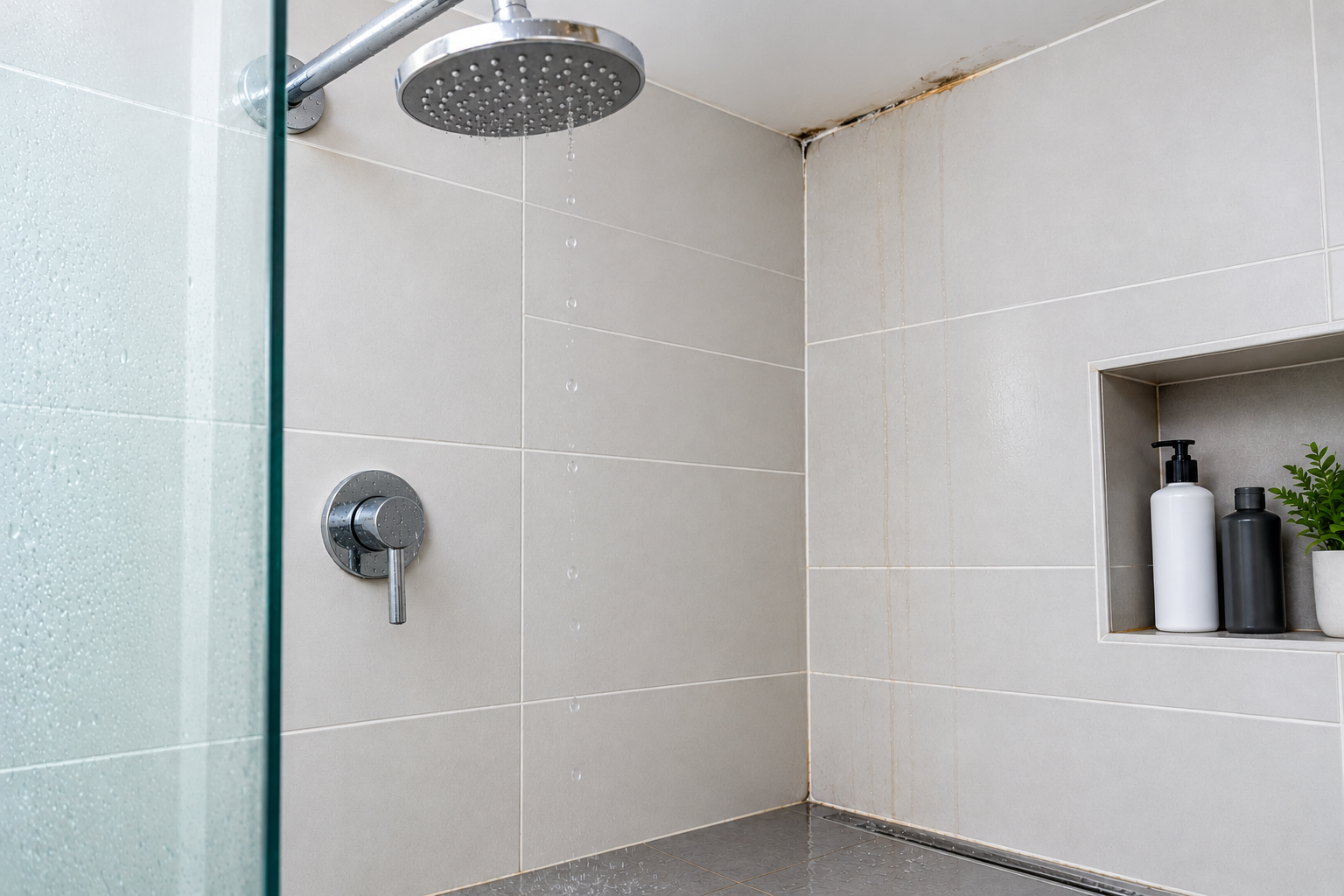
A shower that seeps a little in July is usually seeping a lot more by November. The shower hasn’t changed. The weather has, and in Sydney, spring brings the warmth and humidity that let trapped water start doing real damage.
So if you’ve noticed a darkening grout line, a tile that sounds hollow when tapped or a musty smell that keeps coming back, don’t park it until summer. Spring is the right time to book leaking shower repairs in Sydney, before a cheap fix becomes a much bigger job.
Why spring makes a shower leak worse
Water that escapes through cracked grout or tired silicone doesn’t drain away. It soaks into the sand and cement bed under the tiles, the timber plate at the base of the wall frame, or the ceiling below if the bathroom is upstairs.
Through June, July and August, cooler temperatures slow down what that moisture can do. Spring takes the brakes off. South Eastern Sydney Local Health District notes that mould grows in rooms that are damp, warm or poorly ventilated, and the cavity behind a leaking shower ticks every box.
Bathrooms also dry more slowly as humidity climbs. Add a houseful of guests in December and the leak gets fed more often too.
The small signs worth taking seriously
Most leaks show themselves well before a stain appears on the ceiling. Look for:
- Grout that’s cracked, crumbling or darker than the rest of the floor
- Silicone that’s lifting, mouldy or missing at the floor junction
- Loose, cracked or hollow-sounding tiles
- Mould that returns within days of cleaning
- Bubbling paint, damp skirting boards or swollen door frames outside the bathroom
- Ants around the bathroom or the rooms next to it
That last one surprises people, but dampness and visible ants are both on our list of warning signs. Leaking showers rarely announce themselves with a puddle. They leave quiet clues, and spring is when those clues multiply.
What happens if you wait until summer?
Water keeps tracking into places you can’t see. Timber plates swell and rot, tiles lose their bond and lift, and mould grows behind the surface where scrubbing can’t reach it.
According to NSW Health, mould exposure can cause a runny or blocked nose, irritated eyes and skin, and sometimes wheezing.
For landlords and strata managers, the stakes rise again. A leak in one unit can end up in the ceiling of the unit below, and suddenly you’re managing two lots and a much bigger bill.
The short version? Caught early, a shower leak is usually a repair. Caught late, it’s closer to a rebuild.
How Everseal handles a leaking shower repair
Every job starts with finding where the water is actually getting out. It might be the grout, the silicone, a failed membrane or the plumbing, and each needs a different fix. Guessing is how people end up paying twice.
Once we know the cause, our aim is a lasting leaking shower repair without lifting tiles that don’t need to come up. Where the waterproofing has failed, we use hybrid flexible rubber-based membranes.
We’ll be straight with you, though. If the membrane has completely broken down, or the subfloor has started to rot, tiles have to come off. You’ll hear that at the inspection, not halfway through the job.
Our work carries a 7-year written guarantee on products and workmanship, and our licensed team (licence No. 181936C) brings more than 30 years of industry experience.
Frequently asked questions
Can a leaking shower be fixed without removing tiles?
Often, yes. Many shower leaks start with failed grout or silicone, which can usually be repaired without lifting tiles. Everseal diagnoses the source first and avoids unnecessary tile removal where possible. If the waterproofing membrane underneath has broken down, some tiles may need to come up so it can be replaced properly.
Should I wait until after summer to fix a leaking shower?
It’s better not to. Mould thrives in damp, warm conditions, so September to February is when hidden water damage tends to spread fastest. A spring inspection gives you time to fix the leak before humidity peaks and before Christmas guests arrive.
What should I do if my shower is leaking into the room below?
Stop using that shower if you can, and dry wet ceilings, walls or carpets quickly, since NSW health advice is to dry water-damaged surfaces within 48 hours to prevent mould. Take photos for your records. In a strata building, tell your strata manager early, then book a leak diagnosis.
Book a spring shower inspection with Everseal
A small leak is the cheapest it will ever be right now. Everseal helps homeowners, landlords, strata and property managers across Greater Sydney with expert leak diagnosis and a free quote. Contact our team online or call (02) 9676 8666 to book an inspection before summer.